How Enterprises are Scaling AI: Trust, Governance, and Workflow Design
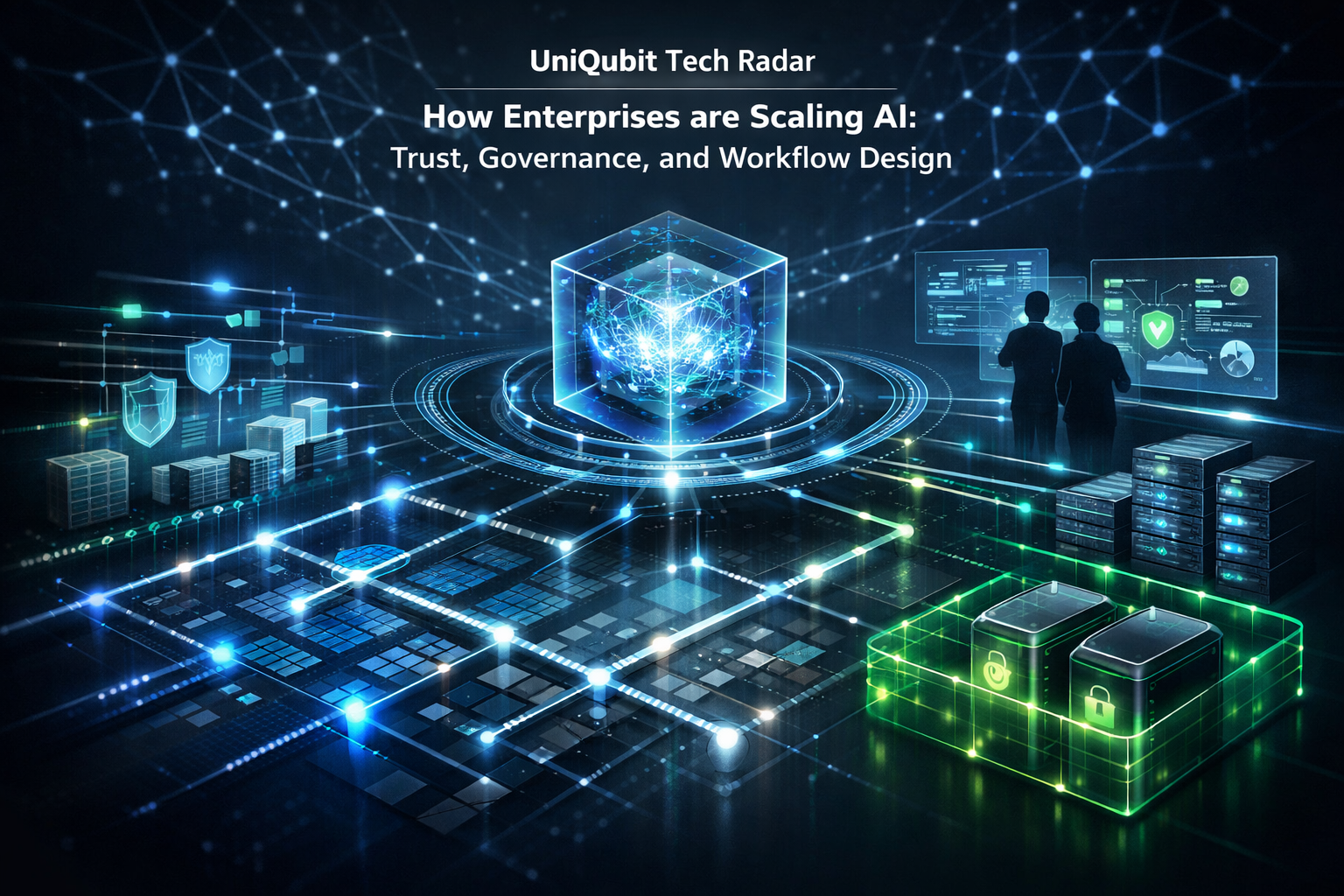
European enterprises are scaling AI by treating it as an operational layer rather than a standalone productivity tool. Organizations including Philips, BBVA, and Scania are embedding governance, security, and workflow redesign directly into AI adoption strategies, with human oversight remaining central to deployment.
Summary
European enterprises are scaling AI by treating it as an operational layer rather than a standalone productivity tool. Organizations including Philips, BBVA, and Scania are embedding governance, security, and workflow redesign directly into AI adoption strategies, with human oversight remaining central to deployment.
Key Updates
- Scaling AI involves building trust, governance, and workflow design rather than just technical rollout.
- Successful organizations treat AI as an operating layer and leadership discipline.
- Involving security, legal, compliance, and IT early helps teams move faster with more trust.
- AI scales effectively when teams redesign workflows to integrate AI, not just use it as a feature.
Why It Matters
The signal here is not that enterprises are simply adopting more AI tools. It is that successful deployments increasingly depend on operational integration: governance, workflow redesign, compliance alignment, and human review structures.
This suggests the competitive advantage may shift from “who has AI access” to “who can operationalize AI safely and consistently across existing systems.”
AI adoption is starting to resemble infrastructure modernization more than experimental software deployment.
Builder Takeaway
Builders should pay closer attention to workflow architecture and operational boundaries, not just model capabilities. Teams that integrate AI into existing review, compliance, and decision systems may scale faster than teams treating AI as a standalone assistant layer.
Human escalation paths, auditability, and cross-functional governance are increasingly becoming core product requirements rather than enterprise add-ons.
How strong is this signal for builders?
Signal feedback is stored anonymously and used to improve Tech Radar editorial quality.
Want more builder-focused AI and infrastructure signals?
Follow UniQubit Tech Radar or contact UniQubit about the systems you are building.
Sources
- How enterprises are scaling AI - OpenAI Blog